
Keynote Speakers
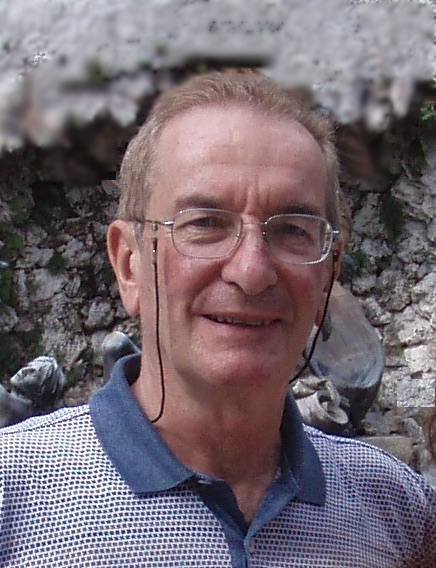
Prof. Silvano Donati
University of Pavia, Italy
Speech Title: Self-Mixing Interferometry: a Universal Yardstick to Measure Almost Everything
Abstract: In this talk, we
describe the principle of operation of self-mixing
interferometer, a coherent configuration for the
measurement of dimensional and kinematic quantities such
as: displacement, distance, vibration amplitude,
thickness, angle, and curvature, and also physical
quantities like: coupling factors, line width, alfa-factor,
and index of refraction. In the measurement arrangement,
the laser undergoes self-injection at weak level,
leading to an amplitude and frequency modulation driven
by external optical path length. We will describe the
development of a straightforward displacement-measuring
instrument, based on up/down counting of fringes, and
then we extend the measurement to the practical case of
a diffuse (non-cooperative) target, introducing the
speckle-pattern statistics, corrected by a BST (bright
speckle tracking) technique, shown capable of covering
displacements up to 1-m with mm-resolution and accuracy.
For sub-mm vibrations, we will report on the
implementation of two-channel (or, referenced)
vibrometer, based on analogue processing of the self-mix
signal, removing the speckle-related amplitude errors
thanks to a servo-loop concept, so that the instrument
is capable of true differential operation, and covers a
dynamic range of amplitudes extending from a
noise-limited minimum of 100 pm/√Hz to about 500 mm with
good linearity. The vibrometer allows the non-contact
measurement of the mechanical frequency response and,
even more unusual, of the hysteresis cycle (or the
stress/strain diagram) of a sample under test.
Additional examples of a number of surprising
measurements performed by self-mix will be finally
surveyed, i.e., the absolute distance meter, the
thickness, angles and return echoes measurements as well
as that of laser parameters like linewidth and
alpha-factor. An outlook on perspectives and future
perspectives of self-mix will conclude the talk.
Biodata: Silvano Donati has been Full Professor of University of Pavia (Italy) since 1980 before becoming Emeritus in 2015. He has authored or co-authored 350+ papers and holds a dozen patents, and has written two books, ‘Photodetectors’ (2nd ed.: IEEE_Wiley 2021) and ‘Electro-Optical Instrumentation’ (2nd ed.: CRC 2023), covering the subject of his courses at University of Pavia and abroad. His main achievements have been self-mixing interferometry and chaos-shift-keying cryptography, the topics covered in his Distinguished Lecture talk given in 21 LEOS (now IPS) Chapters 2007-09 and continued as a Traveling Lecturer of OSA and SPIE on Self-Mixing and Lidars to date, covering a total 105 Chapters visited. He has received several awards from the AEIT and IEEE, in particular the Marconi medal, the Aaron Kressel Award and the Distinguished Service Award of the IEEE Photonics Society. He was the founder (1996) and first Chairman (1997-01) of the Italian LEOS Chapter, LEOS VP Region 8 Membership (2002-04) and BoG (2004-06), and the Chairman of the IEEE Italy Section (2008-09). He has spent semesters as Visiting Professor in several Universities of Taiwan: NTU in Taipei, 2005, Sun Yat Sen in Kaohsiung (2007, 2008, 2010), NCKU in Tainan, 2012, NCHU in Taichung, 2013-14, NTUT in Taipei 2015-16 NTU in Taipei 2018-19 and NTUST in Taipei 2023. Prof. Donati is Life Fellow of the IEEE, Optica Emeritus Fellow and SPIE Life Member.
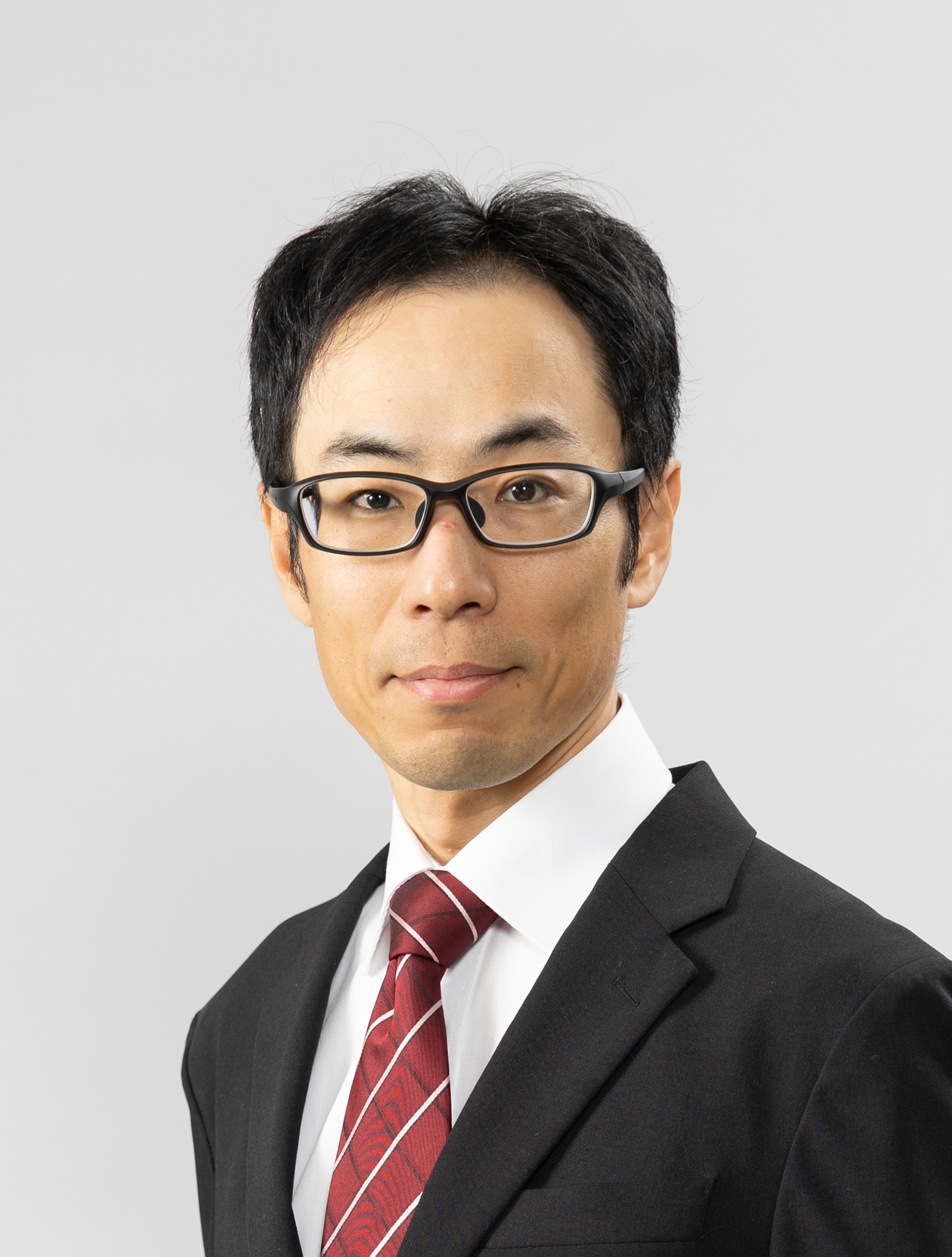
Prof. Masaaki Fukasawa
The University of Osaka, Japan
Speech Title: Martingale expansion for stochastic volatility
Abstract: The martingale
expansion provides a refined approximation to the
marginal distributions of martingales beyond the normal
approximation implied by the martingale central limit
theorem. We develop a martingale expansion framework
specifically suited to continuous stochastic volatility
models. Our approach accommodates both small
volatility-of-volatility and fast mean-reversion models,
yielding first-order perturbation expansions under
essentially minimal conditions.
Biodata: Masaaki Fukasawa is Professor at The University of Osaka, charing Stochastic Analysis Group at Graduate School of Engineering Science, since 2016. He has been Co-Editor of Finance and Stochastics since 2018. He has been working on Mathematical Finance and related issues, in particular, Asymptotic Analysis of financial stochastic models.
Invited Speaker
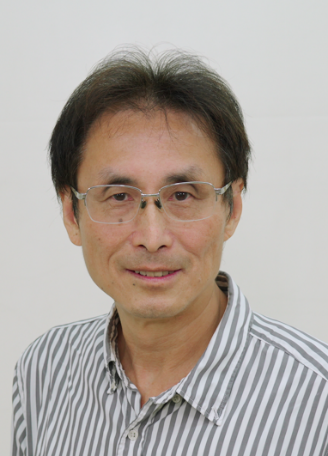
Prof. Hsi-Sheng Goan
National Taiwan University, Taiwan
Speech Title: Quantum Recurrent Unit: A Parameter-Efficient Quantum Neural Network Component
Abstract:
Biodata:
Hsi-Sheng Goan received the Ph.D. degree in physics from the University of Maryland, College Park, USA, in 1999. He then worked as a Postdoctoral Research Fellow at the University of Queensland, Brisbane, Australia, from 1999 to 2001. From 2002 to 2004, he was a Senior Research Fellow at the Center for Quantum Computer Technology at the University of New South Wales, Sydney, Australia, and was awarded the Hewlett-Packard Fellowship. He then took up a faculty position in the Department of Physics at National Taiwan University (NTU) in 2005. He is currently a Professor of Physics at NTU, working in the fields of Quantum Computing and Quantum Information, Quantum Control, Mesoscopic (Nano) Physics, Quantum Optics, and Quantum Optomechanical and Electromechanical Systems. He has served on the Editorial Boards of several international scientific journals, including the EPJ: Quantum Technology, International Journal of Quantum Information, and Chinese Journal of Physics.Speakers in 2027 to be announced soon......